- 0963 00 88 11


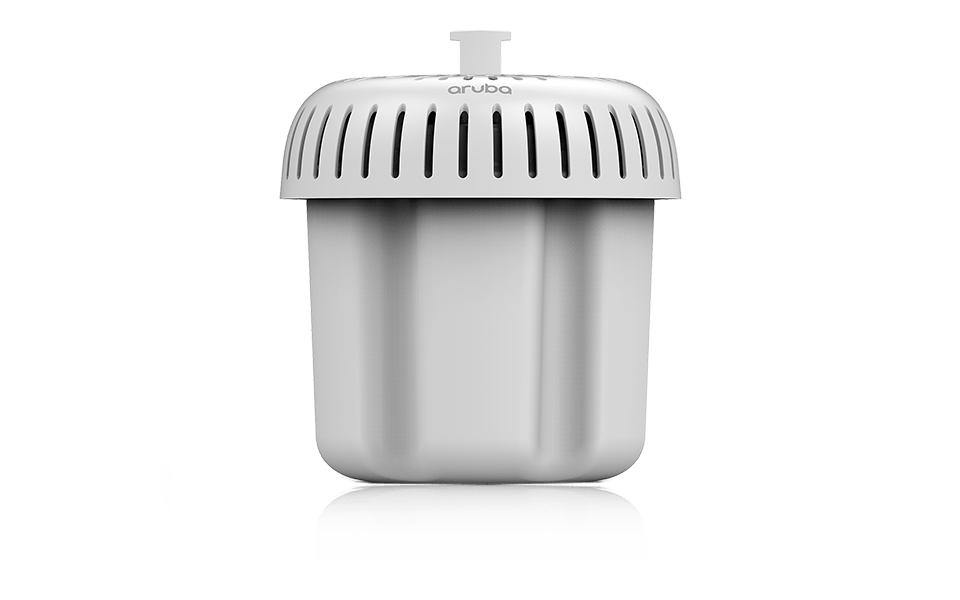
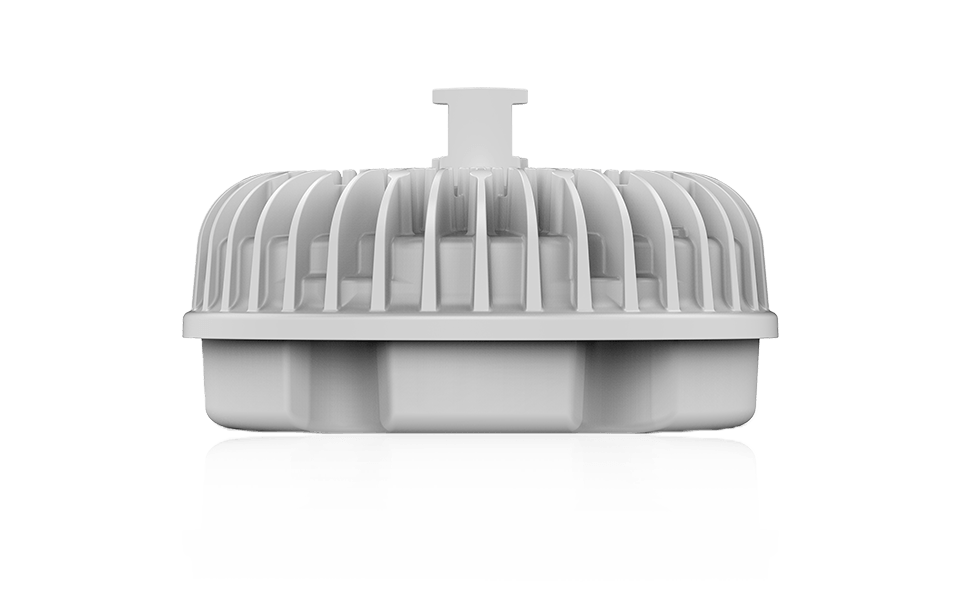
Aruba 570 Series Outdoor Access Points


-
Wi-Fi 6 hiệu suất cao lý tưởng cho các điều kiện thời tiết khắc nghiệt ngoài trời như bãi đỗ xe, sân vận động và địa điểm công cộng.
Aruba 570 là access points có khả năng hoạt động ở tần số cao Wi-Fi 6 (802.11ax) với môi trường ngoài trời.
Chúng được thiết kế để chịu được điều kiện thời tiết khắc nghiệt và nhiệt độ cao, mang đến hiệu suất Wi-Fi 6 cao nhất cho các khu vực ngoài trời và đối mặt với các thách thức môi trường. Các điểm truy cập dòng 570 được trang bị khả năng hoạt động mạnh mẽ và phạm vi phủ sóng rộng lớn, mang lại công suất và khả năng phủ sóng tối đa. Chúng cung cấp khả năng 4x4:4SS MU-MIMO, hỗ trợ tính năng ClientMatch nâng cao của Aruba và được tích hợp công nghệ Bluetooth để hỗ trợ dịch vụ định vị của Aruba.
Các điểm truy cập dòng 570 được xây dựng với mục đích chịu được những điều kiện khắc nghiệt của môi trường ngoài trời. Chúng có khả năng chịu nhiệt độ cực cao và cực thấp, độ ẩm biến đổi đa dạng và có khả năng chống lại tác động của mưa. Bên cạnh đó, chúng còn được bảo vệ hoàn toàn để ngăn chặn sự xâm nhập của chất gây ô nhiễm không khí. Tất cả các thành phần điện được bao phủ bởi lớp bảo vệ công nghiệp để đảm bảo sự ổn định và an toàn.
Điểm truy cập Aruba Wi-Fi 6 dòng 570 mang đến khả năng kết nối cao cấp cho các môi trường di động và hệ thống IoT mật độ cao. Với tốc độ dữ liệu không dây tối đa lên đến 3 Gbps (HE80/HE40), các điểm truy cập dòng 570 đáp ứng đủ tốc độ và độ tin cậy cần thiết cho các môi trường đòi hỏi sự khắt khe.
The 570 Series APs are designed to optimize user experience by maximizing Wi-Fi efficiency and dramatically reducing airtime contention between clients.
Features include Uplink and Downlink Orthogonal Frequency Division Multiple Access (OFDMA), Downlink Multi-User MIMO (MU-MIMO) and cellular co-location. With up to 4 spatial stream and 160 MHz channel capability, the 570 Series provides groundbreaking wireless capabilities for any application.
Read the Multi-User 802.11ax white paper for further information.
Advantages of OFDMA
This capability allows Aruba Wi-Fi 6 APs to handle multiple Wi-Fi 6 enabled clients simultaneously on a single radio. Channel utilization is optimized per transaction by matching allocated bandwidth in a channel to the offered user load. These sub divisions of the channel are referred to as Resource Units (RU).
Multi-User MIMO (MU-MIMO)
The 570 Series APs support downlink MU-MIMO similar to Wi-Fi 5 (802.11ac Wave 2) APs. With the introduction OFDMA in Wi-Fi 6, the overhead for this capability is reduced and MU‑MIMO effectiveness is substantially improved for large client counts.
Wi-Fi 6 and MU-MIMO aware client optimization
Aruba’s patented AI powered ClientMatch technology ensures that all clients are attached to their best serving Access Point. Session metrics, network metrics, applications and client type are used to identify and maintain the best connection.
Advanced Cellular Coexistence (ACC)
The ACC feature uses built in filtering to automatically minimize the impact of interference of high power cellular base stations, in building distributed antenna systems as well as small cell and femtocell equipment.
Intelligent Power Monitoring (IPM)
Aruba APs continuously monitor and report hardware energy consumption. APs can be configured to enable or disable capabilities based on the available PoE power – ideal when wired switches have exhausted their power budget.
Aruba Wi-Fi 6 APs include an integrated Bluetooth 5 and 802.15.4 radio (for Zigbee support) to simplify deploying and managing IoT-based location services, asset tracking services, security solutions and IoT sensors. This allow organizations to leverage the 570 Series as an IoT platform, which eliminates the need for an overlay infrastructure and additional IT resources.
Target Wake Time (TWT)
Ideal for IoT solutions that communicate infrequently, this Wi-Fi 6 capability allows IoT devices to use 802.11ax protocol. TWT coordinates with client devices to allow them to sleep for extended periods and use shorter wake times to communicate before returning to sleep. This substantially extends the useful operating life of Wi-Fi 6 based battery powered sensors.
ARUBA SECURE INFRASTRUCTURE
The Aruba 560 Series includes components of Aruba’s Zero Trust Security to help protect user authentication and wireless traffic. Select capabilities include:
WPA3 and Enhanced Open
Support for stronger encryption and authentication is provided via the latest version of WPA for enterprise protected networks. Enhanced Open offers seamless protection for users connecting to open networks where each session is automatically encrypted to protect user passwords and data on guest networks.
WPA2-MPSK
MPSK enables simpler passkey management for WPA2 devices – should the Wi-Fi password on one device or device type change, no additional changes are needed for other devices. Requires Aruba ClearPass Policy Manager.
VPN Tunnels
In Remote AP (RAP) and IAP-VPN deployments, the Aruba 560 Series can be used to establish a secure SSL/IPSec VPN tunnel to a Mobility Controller that is acting as a VPN concentrator.
Trusted Platform Module (TPM)
For enhanced device assurance, all Aruba APs have an installed TPM chip for secure storage of credentials and keys, and boot code.
SIMPLE AND SECURE ACCESS
To simplify policy enforcement, the Aruba 570 Series uses Aruba’s Policy Enforcement Firewall (PEF) to encapsulate all traffic from the AP to the Mobility Controller (gateway) for end-to-end encryption and inspection. Policies are applied based on context including user role, device type, application, and location. This reduces the manual configuration of SSIDs, VLANs, and ACLs. PEF also serves as the underlying technology for Aruba Dynamic Segmentation.
HIGH DENSITY CONNECTIVITY
Each 570 Series AP provide connectivity for a maximum of 512 associated clients per radio (1024 total).
Flexible Operation and Management
A unique feature of Aruba APs is the ability to operate in either controller-less or controller-based mode.
Controller-less (Instant) Mode
In controller-less mode, one AP serves as a virtual controller for the entire network. Learn more about Instant mode in this technology brief.
Mobility Controller Mode
For optimized network performance, roaming and security, APs tunnel all traffic to a mobility controller for central management of traffic forwarding, segmentation, encryption, and policy enforcement. Learn more in the ArubaOS datasheet.
Management Options
Available management choices include Aruba Central (cloudbased) or Aruba AirWave (multi-vendor, on prem) solutions.
For large installations across multiple sites, Aruba APs can be shipped and activated with Zero Touch Provisioning through Aruba Central or AirWave. This reduces deployment time, centralizes configuration, and provides inventory visibility
Hardware Variants
• AP-574
- 5 GHz: Four Nf connectors for external antenna operation
- 2.4 GHz Two Nf connectors for external antenna operation
- BLE/Zigbee: Integrated omnidirectional antenna and peak gain of 4.2dBi
• AP-575
- Built in Omni Directional Antennas
- 5 GHz Antennas 5dBi
- 2.4GHz Antennas 3.4dBi
- BLE/Zigbee: Integrated omnidirectional antenna and the peak gain of 6dBi
• AP-577
- Built in 90°H x 90°V Directional Antennas
- 5 GHz Antennas 5.6dBi
- 2.4 GHz Antennas 6.8dBi
- BLE/Zigbee: Integrated omnidirectional antennas with peak gain of 8.4dBi
Wi-Fi Radio Specifications
• AP type: Outdoor Hardened, Wi-Fi 6 dual radio, 5 GHz 4x4 MIMO and 2.4 GHz 2x2 MIMO
• Software-configurable dual radio supports 5 GHz (Radio 0) and 2.4 GHz (Radio 1)
5 GHz:
• Four spatial stream Single User (SU) MIMO for up to 4.8 Gbps wireless data rate to individual 4SS HE160 Wi-Fi 6 client device (max)
• Two spatial stream Single User (SU) MIMO for up to 1.2 Gbps wireless data rate to individual 2SS HE80 Wi-Fi 6 client device (typical)
• Four spatial stream Multi User (MU) MIMO for up to 4.8 Gbps wireless data rate to up to four 1SS or two 2SS HE160 Wi-Fi 6 DL-MU-MIMO capable client devices simultaneously (max)
• Four spatial stream Multi User (MU) MIMO for up to 2.4 Gbps wireless data rate to up to four 1SS or two 2SS HE80 Wi-Fi 6 DL-MU-MIMO capable client devices simultaneously (typical)
2.4 GHz
• Two spatial stream Single User (SU) MIMO for up to 575 Mbps wireless data rate to individual 2SS HE40 Wi-Fi 6 client device (max)
• Two spatial stream Single User (SU) MIMO for up to 287 Mbps wireless data rate to individual 2SS HE20 Wi-Fi 6 client device (typical)
• Support for up to 512 associated client devices per radio, and up to 16 BSSIDs per radio
• Supported frequency bands (country-specific restrictions apply):
- 2.400 to 2.4835 GHz (ISM)
- 5.150 to 5.250 GHz (U-NII-1)
- 5.250 to 5.350 GHz (U-NII-2A)
- 5.470 to 5.725 GHz (U-NII-2C)
- 5.725 to 5.850 GHz (U-NII-3/ISM)
- 5.850 to 5.875 GHz (U-NII-4)
• Available channels: Dependent on configured regulatory domain.
• Dynamic frequency selection (DFS) optimizes the use of available RF spectrum.
• Supported radio technologies:
- 802.11b: Direct-sequence spread-spectrum (DSSS)
- 802.11a/g/n/ac: Orthogonal frequency-division multiplexing (OFDM)
- 802.11ax: Orthogonal frequency-division multiple access (OFDMA) with up to 16 resource units (RU)
• Supported modulation types:
- 802.11b: BPSK, QPSK, CCK
- 802.11a/g/n: BPSK, QPSK, 16-QAM, 64-QAM, 256-QAM (proprietary extension)
- 802.11ac: BPSK, QPSK, 16-QAM, 64-QAM, 256-QAM, 1024 QAM (proprietary extension)
- 802.11ax: BPSK, QPSK, 16-QAM, 64-QAM, 256-QAM, 1024 QAM
POWER
• Maximum (worst-case) power consumption:
- POE powered (dual ports): 32.0W
- POE powered (single port, full function): 26.1W
• Maximum (worst-case) power consumption in idle mode:
14.0W (single POE) or 16.0W (dual POE)
• Maximum (worst-case) power consumption in deep-sleep mode: 2.9W (single POE) or 3.9W (dual POE)
• The AP supports Power over Ethernet (POE; on port E0 and/or E1)
• When POE power is supplied to both Ethernet ports, the AP can be configured to combine or prioritize power sources
• Power sources are sold separately; see the ordering Information section below for details
• When powered by 1x 802.3at (class 4) POE and with the IPM feature disabled, the AP will disable the other Ethernet port. In the same configuration but with IPM enabled, the AP will start up in unrestricted mode, but may dynamically apply restrictions depending on the POE budget and actual power. The feature restrictions and order can be programmed.
• Operating the AP with single or dual 802.3af (class 3 or lower) POE source is not supported.